Posts
Posts


September 15, 2012
In my earlier post I had given the pooja procedures for Vinayaka Chathurthi.Now to the Neivediyam recipes.
According to the Panchagam each day of a month is reffered as Thidhi.The days after Amavasai is known as Valarpirai Thidhi and days after Pournami are Theipirai Thidhi.The fourth day is Chaturthi and the Valarpirai Chaturthi in the Tamizh month of Avanni is celebrated as Vinayaka Chaturthi,But this year we had two Amavasai,so is being celebrated in the Tamizh month of Puratasi on September 19th.
The Neivediyam for the pooja comprises of Kozhukattai,Sundal,Payasam,Aval,Pori..Here in Tamilnadu it varies with every household except that some basic ingredients are the same.I have given the recipe of how it is done by me.
KOZHUKATAI/MODHAGAM
INGREDIENTS
For Modak
Raw rice flour-1 cup
Water-1 cup
Salt-as required
For puran
Coconut grated-1 cup
Jaggery powdered-1cup
Channa dal-1 cup
Cardamon powder-1 tsp

METHOD
For puran/filling
Pressure cook the channa dal with just enough water and drain the water completely
Grind the coconut and dal a little coarsely
Dissolve jaggery in very little water and strain it.If it is clean you can directly add to the coconut mixture
Take a heavy bottomed vessel and cook this just till it leaves the sides and add cardamon powder
This is the puran/filling

For modak
Soak rice for 30 mins
Drain off the water completely and powder it in the mixie until fine
Here in Tamilnadu we have flour mills to grind wet rice
Sieve the flour
Boil 1 cup of water add the sieved 1 cup of rice flour to the boiling water,simmer and saute till the flour becomes a soft dough and this should be done continously
Remove from fire,allow to cool
Make balls with the dough and using your thumbs just press in the middle and using the other fingers just make a cup shape
Make a ball of the puran and keep in the centre and close the puran with the outer layer
Steam the modaks in idli maker for 10-15 mins


Note
We can use the regular rice flour,puttu flour,kozhukattai flour available in supermarkets also.
If you are using the wet rice grind and refrigerate it.
Another method is to soak rice for 30 min,dry it in cloth in shade completely and then grind the rice.
In either method seive the flour to avoid lumps.
Instead of adding the flour to the boiling water we can add the boiling water to the flour as required to get the soft dough
Make balls out of the puran and keep it ready
Steam the modak till the colour of it changes
KARA KOZHUKATAI
INGREDIENTS
For modak
Same as the above
For filling
Urad dal-1 cup
Green chilli-3
Salt-as required
Mustard,urad dal,asafoetida,curry leaves,oilfor seasoning


Method
For filling
Soak the urad dal for 15 mins
Drain the water completely and grind it with salt and green chillies coarsely
Steam this till it is cooked/changes colour
Cool and make crumbles out of it
Heat oil add the seasoning,and also the urad dal crumble and saute for 10 min and cool
For modaks
Make modaks using the dough keep a spoon of filling and just fold and join the edges
Steam these in idli maker for 15 min or till done
RICE PAYASAM
INGREDIENTS
Raw rice-1/2 cup
Yellow Moong dal-a handful
Jaggery-1 cup
Cardamon powder-1tsp
Cashews-a few
Ghee-2tbsp
Water-11/2 cups
Boiled milk-1 cup
Coconut-2 tbsp
Method
In a kadai dry roast the rice and keep aside
Roast the moong dal seperately
Dry grind both together coarsely
In a pressure cooker boil water,simmer and add the powdered rice slowly stirring so that lumps are not formed
Close and pressure cook till done
Dissolve jaggery in little water and strain it
Add this to the cooked rice-dal and boil for few mins and allow to cool
Add cardamon powder,roasted cashews,coconut and milk to it
SUNDAL
INGREDIENTS
Black channa dal-1 cup
Salt-as required
For seasoning
Mustard-1tsp
Urad dal-1 tsp
Grated coconut-1/4 cup
Asafoetida-a pinch
Red chilly-1
Green chilly-2
Ginger- a small piece chopped
Curry leaves-a few
Coriander leaves-a few
Oil-for seasoning
Method
Soak the channa dal for minimum 8 hrs
Pressure cook with salt and drain the water
In a pan pour oil and season with the ingredients except coriander leaves
Add the cooked channa and saute for a few mins
Garnish with coriander leaves
With just two days to go hope you all enjoy making the neivediyams.
According to the Panchagam each day of a month is reffered as Thidhi.The days after Amavasai is known as Valarpirai Thidhi and days after Pournami are Theipirai Thidhi.The fourth day is Chaturthi and the Valarpirai Chaturthi in the Tamizh month of Avanni is celebrated as Vinayaka Chaturthi,But this year we had two Amavasai,so is being celebrated in the Tamizh month of Puratasi on September 19th.
The Neivediyam for the pooja comprises of Kozhukattai,Sundal,Payasam,Aval,Pori..Here in Tamilnadu it varies with every household except that some basic ingredients are the same.I have given the recipe of how it is done by me.
KOZHUKATAI/MODHAGAM
INGREDIENTS
For Modak
Raw rice flour-1 cup
Water-1 cup
Salt-as required
For puran
Coconut grated-1 cup
Jaggery powdered-1cup
Channa dal-1 cup
Cardamon powder-1 tsp

METHOD
For puran/filling
Pressure cook the channa dal with just enough water and drain the water completely
Grind the coconut and dal a little coarsely
Dissolve jaggery in very little water and strain it.If it is clean you can directly add to the coconut mixture
Take a heavy bottomed vessel and cook this just till it leaves the sides and add cardamon powder
This is the puran/filling

For modak
Soak rice for 30 mins
Drain off the water completely and powder it in the mixie until fine
Here in Tamilnadu we have flour mills to grind wet rice
Sieve the flour
Boil 1 cup of water add the sieved 1 cup of rice flour to the boiling water,simmer and saute till the flour becomes a soft dough and this should be done continously
Remove from fire,allow to cool
Make balls with the dough and using your thumbs just press in the middle and using the other fingers just make a cup shape
Make a ball of the puran and keep in the centre and close the puran with the outer layer
Steam the modaks in idli maker for 10-15 mins


Note
We can use the regular rice flour,puttu flour,kozhukattai flour available in supermarkets also.
If you are using the wet rice grind and refrigerate it.
Another method is to soak rice for 30 min,dry it in cloth in shade completely and then grind the rice.
In either method seive the flour to avoid lumps.
Instead of adding the flour to the boiling water we can add the boiling water to the flour as required to get the soft dough
Make balls out of the puran and keep it ready
Steam the modak till the colour of it changes
KARA KOZHUKATAI
INGREDIENTS
For modak
Same as the above
For filling
Urad dal-1 cup
Green chilli-3
Salt-as required
Mustard,urad dal,asafoetida,curry leaves,oilfor seasoning


Method
For filling
Soak the urad dal for 15 mins
Drain the water completely and grind it with salt and green chillies coarsely
Steam this till it is cooked/changes colour
Cool and make crumbles out of it
Heat oil add the seasoning,and also the urad dal crumble and saute for 10 min and cool
For modaks
Make modaks using the dough keep a spoon of filling and just fold and join the edges
Steam these in idli maker for 15 min or till done
RICE PAYASAM
INGREDIENTS
Raw rice-1/2 cup
Yellow Moong dal-a handful
Jaggery-1 cup
Cardamon powder-1tsp
Cashews-a few
Ghee-2tbsp
Water-11/2 cups
Boiled milk-1 cup
Coconut-2 tbsp
Method
In a kadai dry roast the rice and keep aside
Roast the moong dal seperately
Dry grind both together coarsely
In a pressure cooker boil water,simmer and add the powdered rice slowly stirring so that lumps are not formed
Close and pressure cook till done
Dissolve jaggery in little water and strain it
Add this to the cooked rice-dal and boil for few mins and allow to cool
Add cardamon powder,roasted cashews,coconut and milk to it
SUNDAL
INGREDIENTS
Black channa dal-1 cup
Salt-as required
For seasoning
Mustard-1tsp
Urad dal-1 tsp
Grated coconut-1/4 cup
Asafoetida-a pinch
Red chilly-1
Green chilly-2
Ginger- a small piece chopped
Curry leaves-a few
Coriander leaves-a few
Oil-for seasoning
Method
Soak the channa dal for minimum 8 hrs
Pressure cook with salt and drain the water
In a pan pour oil and season with the ingredients except coriander leaves
Add the cooked channa and saute for a few mins
Garnish with coriander leaves
With just two days to go hope you all enjoy making the neivediyams.
The festive season has begun with Varalakshmi Nombu,Krishna Jayanthi which would be followed by Vinayaga Chathurthi,Saraswathi Pooja,Deepavali.Here in Tamilnadu clay is used to make pillaiyar.Though it was made by hands those days now moulds are used.
The procedures in each house differ.We buy the clay pillaiyar do Abhishegam with Oil,Diraviya Podi,Rice Flour,Turmeric powder,Sandal powder,Curd,Milk,Tender coconut,Lime juice,Mixed fruits,Vibudhi.Also keep in mind all these should be used in small quantities as the idol is made of clay.
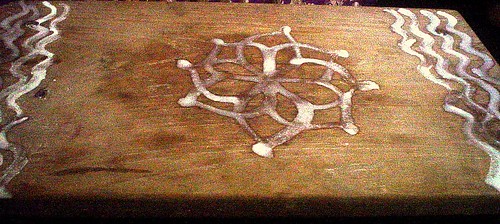
A wooden plank is decorated with kolam and the idol is placed on it
Using sandal powder and kugumam keep pottu(bindi)
Wear a white thread across the shoulder of the idol(poonul)
Keep a coin on the stomach
Decorate with an umbrella,flowers and Erukkam poo malai
Make Kozhukattais and serve on banana leaf along with rice,dal,sundal,payasam
Fruits and Aval,Pori are also placed for Neivediyam
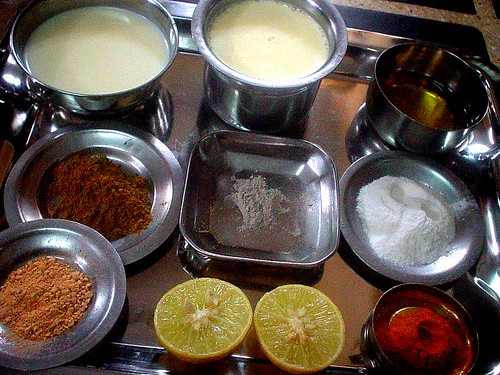
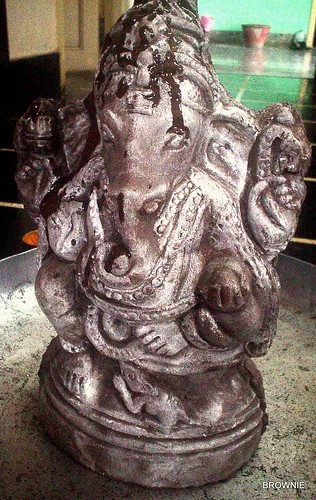
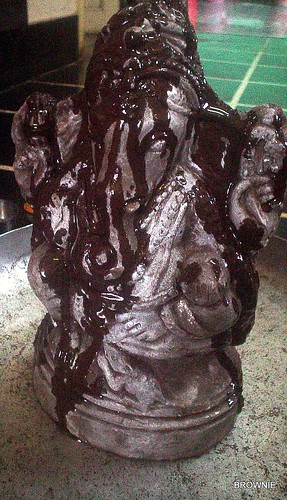
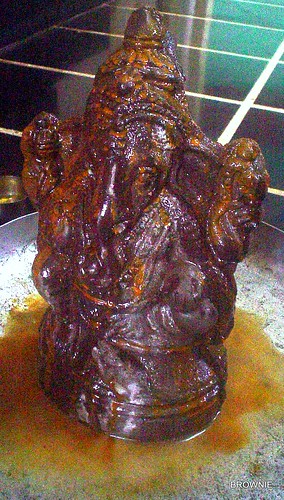
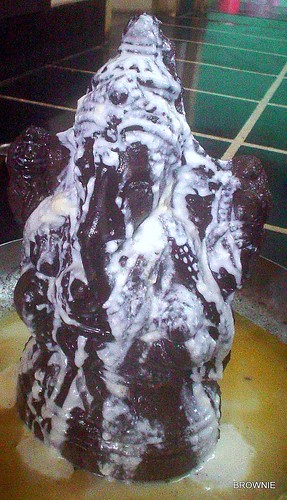
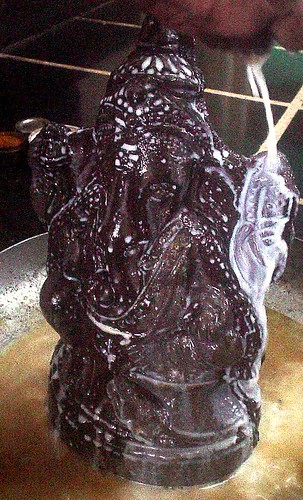
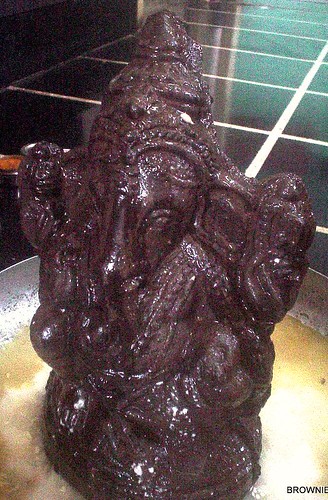
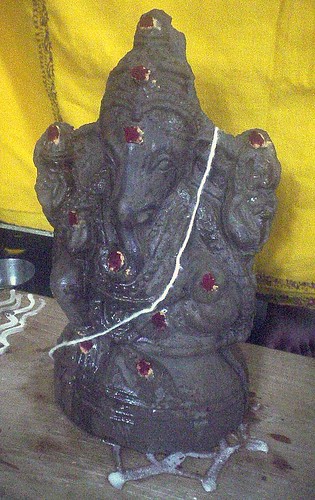


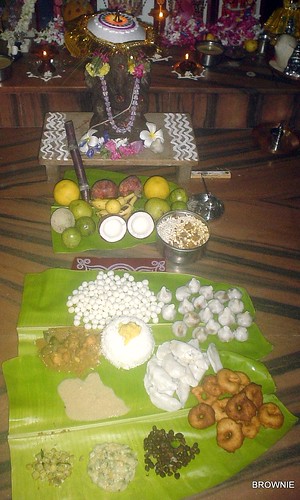
The procedures in each house differ.We buy the clay pillaiyar do Abhishegam with Oil,Diraviya Podi,Rice Flour,Turmeric powder,Sandal powder,Curd,Milk,Tender coconut,Lime juice,Mixed fruits,Vibudhi.Also keep in mind all these should be used in small quantities as the idol is made of clay.
A wooden plank is decorated with kolam and the idol is placed on it
Using sandal powder and kugumam keep pottu(bindi)
Wear a white thread across the shoulder of the idol(poonul)
Keep a coin on the stomach
Decorate with an umbrella,flowers and Erukkam poo malai
Make Kozhukattais and serve on banana leaf along with rice,dal,sundal,payasam
Fruits and Aval,Pori are also placed for Neivediyam
June 01, 2012
CHOCOLATE PIE
I have a good collection of cook books,but of late I've not bought one and seeing Tarla Dalal's Cooking and More I just grabbed a copy of a collection of easy and good recipes.Pies are always in my to do list,but due to constraint in getting some ingredients I always postpone trying them.But luckily was able to try out today and was happy with the taste too.This time my niece who is very interested in cooking got all the ingredients required,made the pie and I was just supervising her.
Ingredients
For the biscuit base
Digestive biscuits crushed-1 cup
Melted butter-1/3 cup
For the filling
Chopped dark chocolate-2 cups
Whipped cream-3 cups
Vanilla essence-1 tsp
Powdered sugar-2tbsp
Milk-1/4 cup
Method
For biscuit base
Combine the biscuit crumbs and the melted butter in a bowl and mix well.
Press the mixture into the base of a 175mm(7") loose bottomed pie dish
Chill until firm for approx.30 min
For filling
Combine chocolate and milk in MW safe bowl and MW on high for 30 secs
Mix till no lumps remain and let cool completely
Add the vanilla,powdered sugar and whipped cream and fold gently
To assemble
Spread the filling over the set biscuit base and chill till firm for approx. 1 hour
De-mould the pie and decorate with whipped cream or chocolate gratings or strands
Serve chilled
I have a good collection of cook books,but of late I've not bought one and seeing Tarla Dalal's Cooking and More I just grabbed a copy of a collection of easy and good recipes.Pies are always in my to do list,but due to constraint in getting some ingredients I always postpone trying them.But luckily was able to try out today and was happy with the taste too.This time my niece who is very interested in cooking got all the ingredients required,made the pie and I was just supervising her.
Ingredients
For the biscuit base
Digestive biscuits crushed-1 cup
Melted butter-1/3 cup
For the filling
Chopped dark chocolate-2 cups
Whipped cream-3 cups
Vanilla essence-1 tsp
Powdered sugar-2tbsp
Milk-1/4 cup
 |
| CHOCOLATE PIE |
Method
For biscuit base
Combine the biscuit crumbs and the melted butter in a bowl and mix well.
Press the mixture into the base of a 175mm(7") loose bottomed pie dish
Chill until firm for approx.30 min
For filling
Combine chocolate and milk in MW safe bowl and MW on high for 30 secs
Mix till no lumps remain and let cool completely
Add the vanilla,powdered sugar and whipped cream and fold gently
To assemble
Spread the filling over the set biscuit base and chill till firm for approx. 1 hour
De-mould the pie and decorate with whipped cream or chocolate gratings or strands
Serve chilled
Subscribe to:
Posts (Atom)